BitcoinWorld Ripple XRP Escrow Gets Crucial Relief: No Forced Sell-Off Under Clarity Act, Report Confirms In a significant development for the cryptocurrency sector, a new legal analysis provides crucial relief for Ripple Labs, indicating the company will likely face no obligation to forcibly liquidate its substantial escrowed XRP holdings under the proposed Clarity Act. This finding, reported by The Crypto Basic, directly addresses one of the market’s most persistent concerns regarding the potential for a massive, mandated sell-off that could depress the XRP price. The report hinges on a nuanced interpretation of the bill’s provisions and the established regulatory classification of XRP itself. Decoding the Clarity Act’s 20% Ownership Limit The proposed Clarity Act represents a legislative effort to create a clearer regulatory framework for digital assets in the United States. A key provision within early drafts of the bill introduced a concept often referred to as a “20% ownership limit.” This clause sparked immediate concern among XRP holders and market observers, given Ripple’s control of approximately 40% of the total XRP supply through its escrow accounts. However, legal experts and the recent analysis argue this interpretation misconstrues the legislative intent. According to the report, the 20% figure functions not as a rigid cap demanding immediate divestiture but as a flexible guideline or benchmark. Regulators would use this benchmark to help assess a blockchain network’s level of decentralization and maturity. Consequently, a holding exceeding 20% does not automatically trigger a forced sale. Instead, it prompts a deeper evaluation of the asset’s nature and the network’s structure. This distinction is fundamental to understanding the likely regulatory path forward for Ripple. The Central Role of XRP’s “Digital Commodity” Status The analysis underscores that the decisive factor insulating Ripple from a forced sell-off is the judicial determination of XRP’s status. In July 2023, U.S. District Judge Analisa Torres ruled that XRP, as a digital token, is not a security when sold to the general public on exchanges. This landmark ruling classified XRP primarily as a digital commodity . This classification carries profound regulatory implications, shifting primary oversight from the Securities and Exchange Commission (SEC) to the Commodity Futures Trading Commission (CFTC). The CFTC’s regulatory philosophy historically focuses on market integrity and preventing fraud and manipulation in commodity derivatives markets, rather than on controlling the distribution or ownership concentrations of the underlying spot commodities themselves. Therefore, the framework applied to Ripple’s escrow would differ substantially from one applied to a security. The report explicitly states, “If the system’s decentralization and utility are proven, the current holding of 38.5 billion XRP… is unlikely to face a legal sell-off obligation.” Market Impact and Evolving Regulatory Context The potential for Ripple to be forced to rapidly sell billions of XRP tokens has long been a bearish overhang on the asset’s market valuation. Such an event would introduce unprecedented sell-side pressure, likely causing severe price depreciation. The new analysis directly mitigates this concern, stating, “Concerns about a price drop due to a large-scale token release are expected to be significantly eased.” This provides greater predictability for investors and the broader XRP ecosystem. This development occurs within a broader, evolving regulatory landscape. The Clarity Act itself remains in legislative process, and its final language may change. Furthermore, other global jurisdictions are crafting their own digital asset frameworks. Ripple’s ongoing legal engagements, including the pending remedies phase of its case with the SEC, also continue to shape its operational environment. However, the core finding—that existing escrow mechanics are compatible with emerging legislative principles—offers a stable foundation for future planning. Key Factors Differentiating Ripple’s Escrow: Transparent Mechanism: The escrow releases are programmed and publicly visible on the XRP Ledger. Utility Focus: Released XRP is primarily used for business development and ecosystem growth, not merely for company treasury sales. Established Precedent: The escrow system has operated predictably for years, providing market consistency. Expert Perspectives on Decentralization and Utility Legal scholars focusing on cryptocurrency law emphasize that assessments of “decentralization” are multifaceted. Regulators may examine factors beyond mere token distribution, including: Governance structures of the underlying protocol (the XRP Ledger). Diversity and independence of network validators. The breadth of use cases and developer activity independent of the founding entity. Ripple’s role is often characterized as a major participant and stakeholder within the XRP ecosystem, rather than its sole controller. The XRP Ledger operates on a decentralized network of independent validators. Proving the network’s utility and decentralized operation will be central to any final determination under guidelines like those in the Clarity Act. The report suggests that if these elements are successfully demonstrated, the size of Ripple’s escrow will not, in itself, be a violation. Conclusion The analysis concluding that Ripple is unlikely to face a forced sell-off of its escrowed XRP under the Clarity Act marks a pivotal moment for the company and its associated digital asset. By clarifying that the 20% ownership limit is a guideline for evaluating network maturity—not a strict divestiture command—and by anchoring this in XRP’s established status as a digital commodity, the report alleviates a major source of market uncertainty. While the regulatory journey continues, this perspective reinforces the compatibility of Ripple’s existing escrow structure with the direction of proposed U.S. cryptocurrency legislation, providing crucial relief for the XRP ecosystem. FAQs Q1: What is the Clarity Act? The Clarity Act is a proposed U.S. bill aimed at establishing a comprehensive regulatory framework for digital assets and cryptocurrencies, seeking to clarify which agencies have jurisdiction and under what rules they operate. Q2: Why was there fear about Ripple selling its escrowed XRP? Early interpretations of the bill suggested a “20% ownership limit” could force entities holding more to sell down their positions. With Ripple controlling ~40% of XRP in escrow, this raised fears of a massive, mandated sell-off crashing the price. Q3: How does XRP being a “digital commodity” change things? This classification, established by a federal court, places XRP under the CFTC’s purview rather than the SEC’s. The CFTC’s approach to commodity ownership concentration is historically different and less focused on forced divestiture than securities law. Q4: Does this mean Ripple can never sell its escrowed XRP? No. Ripple continues to sell portions of XRP from its treasury (funded by escrow releases) as part of its normal business operations to fund partnerships and development. The report indicates it won’t be forced to sell the entire escrow to comply with the law. Q5: Is the Clarity Act law yet? No. As of this analysis, the Clarity Act is still proposed legislation. Its language could change during the legislative process. This report analyzes the likely application of the bill’s current key concepts to Ripple’s situation. This post Ripple XRP Escrow Gets Crucial Relief: No Forced Sell-Off Under Clarity Act, Report Confirms first appeared on BitcoinWorld .

 US SEC and CFTC Sign MoU to Coordinate Crypto Regulation and...
 Kraken Announces Pi Network Listing Ahead of Pi Day PI Price...
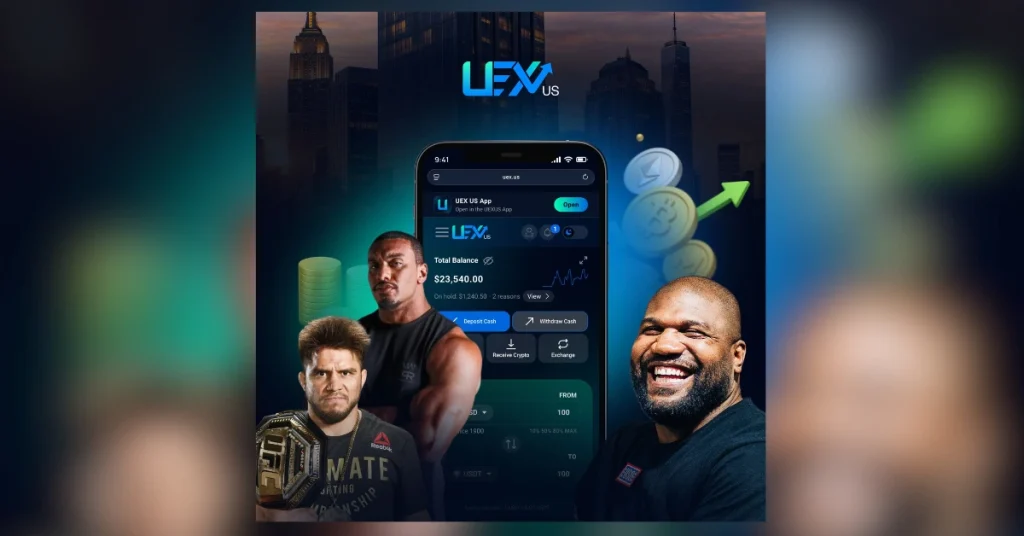 UEX US Expands Its Ecosystem: A Platform Where Digital Asset...
 XRP Price Prediction: Can Bulls Push XRP Above $2 After This...
 ETH News: Why Institutions Keep Choosing Ethereum Over Other...
 Trump-Linked WLFI Launches World Swap Forex Platform
 Thailand Approves Bitcoin for Derivatives Market, Crypto ETF...
 Coinbase CEO Brian Armstrong Sells $550M in Shares as COIN S...