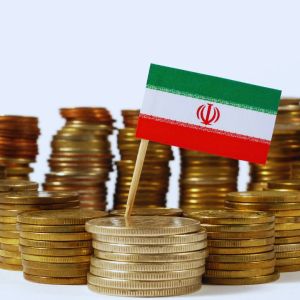
Iran’s rial extended its decline to a record low in April 2026, reflecting mounting economic pressure tied to U.S. actions and ongoing regional tensions. Data tracking the open market exchange rate shows the currency falling to 1,800,000 rials per U.S. dollar on April 29. The move follows a long-term devaluation trend that began in early 2025 and expanded in recent months. At the start of 2025, Iran’s rial traded near 800,000 per dollar, moving within a narrower range during the first half of the year. However, the second half marked a turning point, as the currency weakened more consistently. By September, it had crossed 1,100,000, then climbed past 1,300,000 in December and continued its decline into 2026. Iran’s rial decline accelerates under pressure Iran’s rial recorded short-term volatility in early 2026, but the overall trend remained negative. By late April, the surge to 1,800,000 marked the highest level recorded in the reported period. Meanwhile, U.S. Treasury Secretary Scott Bessent pointed out the economic pressure came from the U.S. campaign Operation Economic Fury. He said the campaign aims to disrupt financial networks by seizing assets, freezing accounts and preventing global financial transactions. Bessent said that almost $500 million has been seized in Iranian crypto assets . He also reported that the U.S. is freezing accounts and monitoring assets overseas, including properties and savings associated with Iran. He said the campaign has been ongoing for more than a year and has been ramped up since orders issued in March 2025. Inflation rises as economic conditions tighten Iran’s rial depreciation coincides with rising domestic inflation. Data from Iran’s central bank shows annual inflation increased from above 40% before the conflict to 50% as of April 4. The change reflects rising costs for essential goods. Prices for items such as rice, eggs, and chicken have increased during the same period. The shift has followed reduced access to foreign currency and disruptions in trade flows. Imported goods, including food, medicine, and raw materials, remain directly affected by exchange rate movements. In addition, according to Cryptopolitan’s earlier report , the blockade on Iranian ports has reduced access to oil revenues and limited foreign currency inflows. This restriction has affected a key source of government income. As a result, economic pressure has continued to build alongside currency depreciation. Strait of Hormuz tensions and global impact Iran’s rial has moved alongside geopolitical tensions in the Strait of Hormuz . The waterway handles a large share of global oil and gas trade during peacetime. Its closure has disrupted supply chains and contributed to rising global fuel and related goods prices. Although Iran and the United States agreed to a ceasefire on April 8, tensions remain. The U.S. imposed a blockade on April 13, further limiting Iran’s ability to generate revenue from exports. Meanwhile, U.S. President Donald Trump rejected a proposal from Iran to reopen the strait in exchange for easing restrictions. The proposal aimed to delay discussions on Iran’s nuclear program, leaving key disagreements unresolved. As a result, the standoff has continued, with multiple countries calling for the reopening of the route for economic and humanitarian reasons. Don’t just read crypto news. Understand it. Subscribe to our newsletter. It's free .
 US SEC and CFTC Sign MoU to Coordinate Crypto Regulation and...
 Kraken Announces Pi Network Listing Ahead of Pi Day PI Price...
 UEX US Expands Its Ecosystem: A Platform Where Digital Asset...
 XRP Price Prediction: Can Bulls Push XRP Above $2 After This...
 ETH News: Why Institutions Keep Choosing Ethereum Over Other...
 Trump-Linked WLFI Launches World Swap Forex Platform
 Thailand Approves Bitcoin for Derivatives Market, Crypto ETF...
 Coinbase CEO Brian Armstrong Sells $550M in Shares as COIN S...