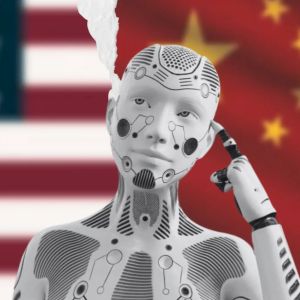
The ITIF says American companies should keep operating in the Chinese market to capture $441 billion in annual revenues. Meanwhile, the CSIS wants to use intelligence tools and real-time data to counter Beijing’s influence worldwide. Two Washington think tanks released reports this week with different takes on competing with China. The two approaches could work together, with the United States staying in China’s market while challenging Chinese power elsewhere. The Information Technology and Innovation Foundation published its findings on May 4. The research shows US affiliates made over $640 billion in revenue from China in 2023. About 70 percent of production, worth $441 billion, was sold to Chinese consumers. The foundation counted nearly 2,000 US companies with operations in mainland China and 921 in Hong Kong that reported assets, sales, or income above $25 million last year. Among publicly traded firms, 173 disclosed China revenues totaling over $307 billion in 2024. Apple took 22 percent of that total. The top 10 companies made up 61 percent. Manufacturing was 55 percent of US company sales in China during 2023, the highest share in a decade. Food producers sold 96 percent of their output to the local Chinese market. Transportation equipment makers sold 92 percent locally. Research spending by US operations in China doubled over ten years, going from just over $3 billion in 2014 to nearly $7 billion in 2023. Companies with bigger China sales showed higher research intensity. But US companies invest less in research within China than in Europe, Japan, or South Korea. Workforce shrinks as profitability declines Employment at US affiliates dropped steadily from 2016 to 2023, falling every year except 2021. Between 2018 and 2019, there was a sharp 25 percent decline during trade tensions. Total employment stood at 1.2 million people in 2023. Manufacturing accounted for 52 percent. The American Chamber of Commerce in China found that 84 percent of member companies had management teams made up mostly of Chinese nationals. Business conditions have gotten worse recently. The US-China Business Council reported 18 percent of member operations ran at a loss. More than one quarter of companies considered relocating outside China over the past four years, a 71 percent jump from earlier periods. The foundation says American presence helps national interests in several ways. Companies get access to Chinese tech talent. China produces 47 percent of the top artificial intelligence specialists compared to 18 percent from the United States. The market works as a way to track technology trends and consumer behavior. Ford added features based on Chinese customer feedback in 2021. US technologies create dependencies in Chinese supply chains. Operating systems for laptops and phones show American dominance, though Huawei’s HarmonyOS reached over one billion devices. The Commercial Aircraft Corporation of China relies on American-made engines for its C919 aircraft, built by a partnership between GE Aerospace and a French company. Public opinion shows mixed views on these issues. While 79 percent of Americans worry about unfair Chinese trade practices, only 12 percent support a complete ban on US investment in China. Another 46 percent back narrow restrictions on advanced technologies, with 18 percent opposing any ban. The Center for Strategic and International Studies released its analysis on April 29. The report recommends using open-source intelligence to counter Chinese influence. A year-long discussion brought together 58 experts in national security, technology, and public campaigns. The report covers three strategies based on tech, media, and economic pressure. First is the real-time monitoring to find weak spots in Chinese influence efforts, such as fentanyl trafficking routes. Second is the improvement of information channels across government agencies and better communication to counter Chinese narratives at the local levels. Third is the measure against any p otential conflicts , like buying up supply chain nodes and disrupting Chinese shipping networks. They also recommended highlighting moments when Chinese officials reveal true intentions in unscripted settings. There’s a middle ground between leaving money in the bank and rolling the dice in crypto. Start with this free video on decentralized finance .
 US SEC and CFTC Sign MoU to Coordinate Crypto Regulation and...
 Kraken Announces Pi Network Listing Ahead of Pi Day PI Price...
 UEX US Expands Its Ecosystem: A Platform Where Digital Asset...
 XRP Price Prediction: Can Bulls Push XRP Above $2 After This...
 ETH News: Why Institutions Keep Choosing Ethereum Over Other...
 Trump-Linked WLFI Launches World Swap Forex Platform
 Thailand Approves Bitcoin for Derivatives Market, Crypto ETF...
 Coinbase CEO Brian Armstrong Sells $550M in Shares as COIN S...