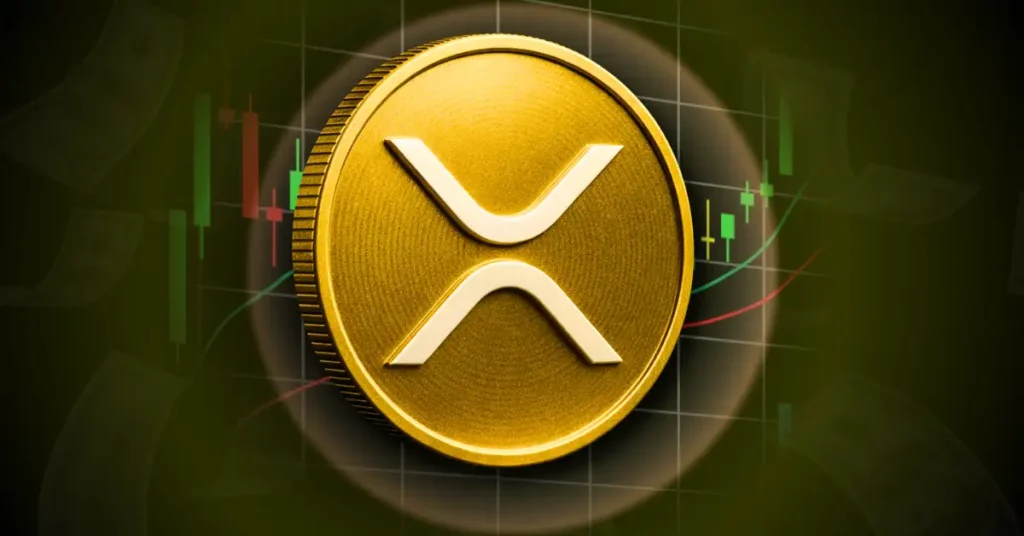
Jake Claver has outlined his macro thesis for why XRP could eventually reach $1,000, arguing in a May 31 interview with MissCrypto that the asset may benefit from a rare convergence of global liquidity stress, stablecoin regulation, tokenization and real-time settlement demand. Claver acknowledged that the target appears extreme when viewed through the usual market-cap framework. But he argued that crypto investors are applying the wrong lens to assets designed to support global settlement networks.“ I know that seems like a high price point for a lot of people,” Claver said. “They look at the total market cap and they look at the total supply and the tokenomics around it, and in most circumstances that wouldn’t be feasible just candidly. That situation is a perfect storm that I do think will play out. I think at this point it’s very likely that it will play out actually.” The Macro Domino Theory Behind XRP At the center of Claver’s argument is the potential unwind of the yen carry trade, which he said began showing signs of stress in August 2024. For decades, investors borrowed cheaply in Japan and deployed that capital into US Treasuries, equities, real estate, gold, silver and other global assets. If Japanese rates rise while US rates decline, he argued, capital could rotate back into Japanese bonds, forcing large-scale selling of US Treasuries and other assets. Related Reading: XRP And XLM Correlation Sparks Hopes Of A Recovery Surge “So what does that look like? Well, I kind of have to take it back to macroeconomics,” Claver said. “A lot of people focus narrowly on the crypto space and they think that this is retail driven. I would challenge that and say that a lot of the volume that we’ve seen move into crypto over the last really two years has been institutionally driven.” That, in Claver’s view, is where crypto infrastructure becomes relevant. He said the back end of the stock market and FX market will need faster liquidity and settlement rails if a disorderly repricing hits traditional markets. “Crypto has a big role to play here and it is the liquidity and movement to real-time settlement for the back end of the stock market and the FX market,” he said. “Because both of those things are going to be affected when all of this plays out. If there’s not enough liquidity or credit that can be extended to these parties, we will literally have an ICE 9 scenario.” Claver said such a scenario would not simply be about crypto prices, but about a broader repricing across global markets. “You can imagine tens of trillions of dollars being sucked out of markets globally,” he said. “And it’s not really going to matter where you have your money. It could be in bonds. It can be in the stock market. It can be in gold and silver.” Claver also linked the thesis to stablecoin legislation and Treasury demand. He said the US did not have a stablecoin bill in place in 2024, but that after its passage in 2025, regulated stablecoins could create domestic demand for Treasuries returning to the market. He also pointed to expected OCC guidance for banks issuing stablecoins, saying the regulator’s comment period ended May 1 and that guidance could arrive by July 18. XRP ETFs, Tether Risk And Settlement Demand A major part of the thesis is Claver’s expectation that Tether could face pressure, either from geopolitical developments, sanctions risk or questions around its reserves. He noted that Tether has a large Treasury position but argued that the lack of a full audit and the presence of Bitcoin and other assets on its balance sheet leave open questions. “They have a significant position, but a large portion of their balance sheet is Bitcoin and other assets,” Claver said. “They’ve never had a full audit. And why would you launch a US compliant stablecoin if you intended to make the other stablecoin that you have compliant over the three-year period that you have to do that?” He said any liquidity disruption at the stablecoin level could affect exchanges and Bitcoin, especially if ETF-related settlement mismatches become more visible. Bitcoin settles on-chain within roughly 30 to 45 minutes, he said, while the stock market remains on T+1. If traditional markets fail to move toward T+0 settlement, he argued, institutions could face pressure to adopt assets and networks better suited for real-time value transfer. “I think that you’re going to see an onslaught of XRP ETFs and a huge rotation of liquidity into that asset,” Claver said. “There’s not a whole lot left on exchanges at this point. It’s very low liquidity for XRP on exchanges. And that would drive the price substantially higher where they could then start using it to settle the back end of the stock market.” Related Reading: XRP Whale Vs. Retail Spread Just Hit A 2-Year Low, What This Means Claver said that dynamic could also help “derisk the currency market,” adding that XRP “solves a lot of the problems that are going to occur when this unwind happens.” Clarity Act And The Limits Of The Thesis Claver framed the Clarity Act as important but not the only trigger. He said the legislation could protect court-established clarity for digital assets and help address DeFi rules, taxation, liquidity pools, KYC and AML requirements. Still, he suggested that regulators may move faster than Congress if OCC guidance gives banks a clear path for stablecoin issuance. “The Clarity Act is really kind of more focused on clarity around what these digital assets are,” Claver said. “The other piece that’s in there that I do think we need is regulations around DeFi here domestically in the US.” He also acknowledged that XRP is not the only network positioned for value transfer. Solana, Hedera, Stellar and XRPL-based tokenization tools were all mentioned as potential parts of the broader market structure shift. However, he argued that XRPL’s native features, including digital identity credentials, permissioned domains, a permissioned DEX, oracles, AMM functionality and multi-purpose tokens, give it a strategic advantage. “There’s just a lot of things that have been built into the XRPL over time that I think give it a strategic advantage alongside the lawsuit and the clarity that they have from that lawsuit with the SEC here domestically in the US,” Claver said. Claver repeatedly described the $1,000 XRP scenario as a theory, not certainty. But his broader view is clear: if macro stress forces traditional markets toward faster settlement, and if regulated stablecoins and tokenized assets accelerate institutional adoption, XRP could become one of the assets most directly exposed to that transition. At press time, XRP traded at $1.30. Featured image created with DALL.E, chart from TradingView.com

 US SEC and CFTC Sign MoU to Coordinate Crypto Regulation and...
 Kraken Announces Pi Network Listing Ahead of Pi Day PI Price...
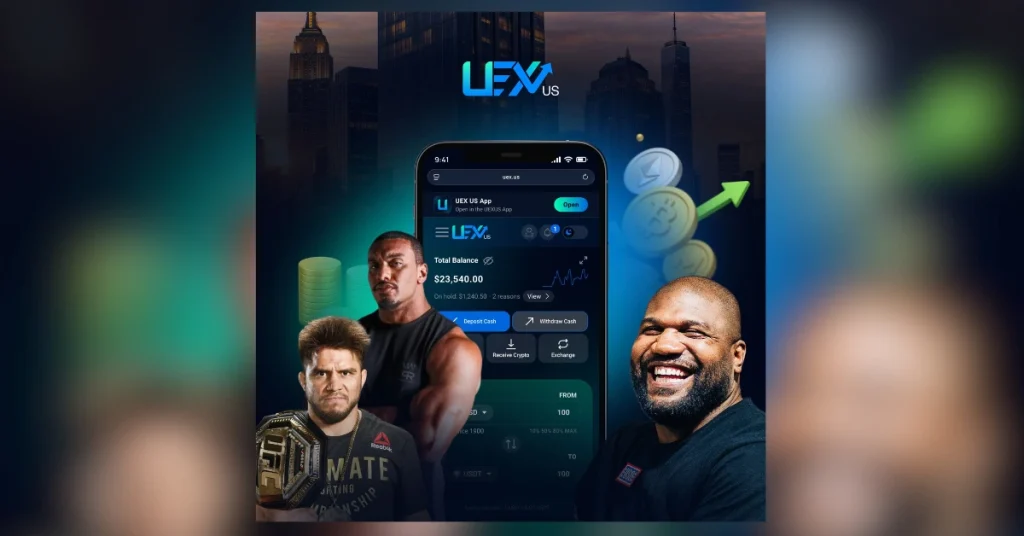 UEX US Expands Its Ecosystem: A Platform Where Digital Asset...
 XRP Price Prediction: Can Bulls Push XRP Above $2 After This...
 ETH News: Why Institutions Keep Choosing Ethereum Over Other...
 Trump-Linked WLFI Launches World Swap Forex Platform
 Thailand Approves Bitcoin for Derivatives Market, Crypto ETF...
 Coinbase CEO Brian Armstrong Sells $550M in Shares as COIN S...