SWIFT’s Next Move: Why Integration with Ripple and Stellar Could Shape the Future of Global Payments Crypto researcher SMQKE points to a future where global payments will evolve through convergence rather than disruption. Instead of a clean break from legacy rails, the financial system appears to be moving toward a blended architecture where traditional infrastructure and blockchain networks increasingly interoperate. In this setting, SWIFT’s long-standing role in correspondent banking may depend less on defending its dominance and more on how effectively it integrates with digital asset ecosystems. For decades, SWIFT has served as the messaging backbone of cross-border finance, connecting banks through a correspondent model that routes payments across multiple intermediaries. While dependable and globally entrenched, the system can be slow, costly, and constrained by banking hours, limitations that stand out in a world shifting toward real-time, always-on settlement. By contrast, blockchain-based networks such as those developed by Ripple and Stellar offer a fundamentally different approach. Using distributed ledger technology, they enable near-instant transfer of value with fewer intermediaries. More notably, native assets, XRP and XLM, are often discussed as liquidity bridges that can reduce friction in cross-border payments and foreign exchange. SWIFT’s Next Chapter: Why the Future of Payments Looks Hybrid, Not Disrupted What’s the bigger picture? SMQKE’s view reflects a broader debate in financial infrastructure: not whether SWIFT will be replaced, but how it will adapt. The growing emphasis on interoperability, tokenization standards, and digital asset compatibility suggests a strategic shift toward integration rather than isolation. Interestingly, there are various telling signs about this transition including SWIFT’s expanding engagement with fintech and treasury infrastructure providers. For instance, Ripple-owned GTreasury’s inclusion as a certified SWIFT partner may be seen as part of a wider pattern of institutional experimentation, even if it does not represent direct blockchain integration. The emerging picture is less a rivalry between SWIFT and crypto, and more a layered system where both coexist. Traditional rails continue to provide regulatory trust and global coverage, while blockchain networks contribute speed, transparency, and continuous settlement. Within this evolving structure, Ripple and Stellar are being viewed as early architects of next-generation payment infrastructure. Some analysts compare their positioning to the structural influence of Visa and Mastercard in card payments, not identical in form, but comparable in network impact. Therefore, the central question is no longer whether legacy finance led by players like SWIFT will be reshaped, but how deeply it will interconnect with digital asset networks that are already redefining global liquidity flows with Ripple and Stellar already shining the light.

 US SEC and CFTC Sign MoU to Coordinate Crypto Regulation and...
 Kraken Announces Pi Network Listing Ahead of Pi Day PI Price...
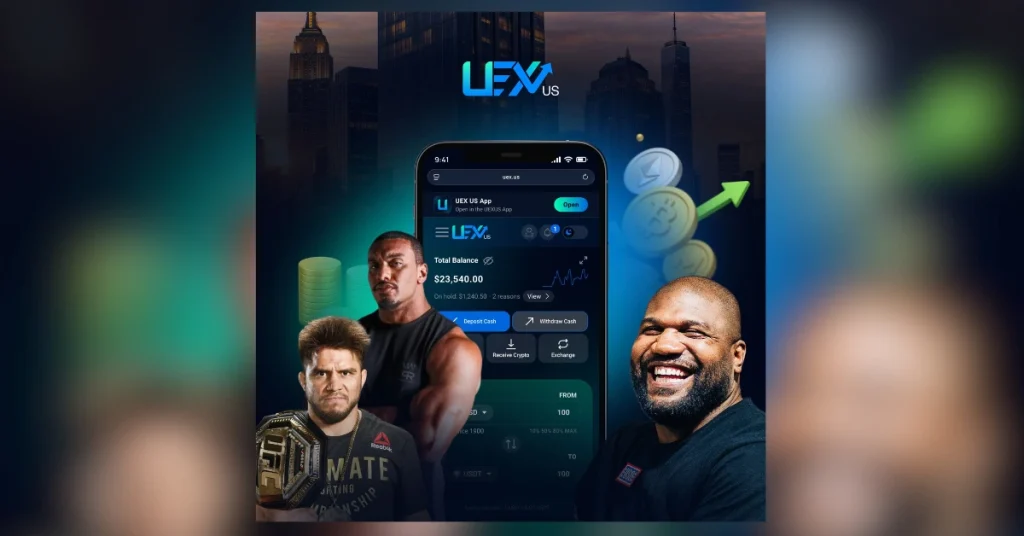 UEX US Expands Its Ecosystem: A Platform Where Digital Asset...
 XRP Price Prediction: Can Bulls Push XRP Above $2 After This...
 ETH News: Why Institutions Keep Choosing Ethereum Over Other...
 Trump-Linked WLFI Launches World Swap Forex Platform
 Thailand Approves Bitcoin for Derivatives Market, Crypto ETF...
 Coinbase CEO Brian Armstrong Sells $550M in Shares as COIN S...