BitcoinWorld Singapore Dollar Strength: MAS Policy Tightening Bolsters Currency Outlook Through 2025 Singapore’s currency demonstrates remarkable resilience as the Monetary Authority of Singapore maintains its tightening stance, according to recent analysis from Standard Chartered economists. The Singapore Dollar (SGD) continues to outperform regional peers amid global economic uncertainty, supported by deliberate policy measures from Singapore’s central bank. This development occurs against a backdrop of shifting global monetary policies and persistent inflationary pressures worldwide. SGD Performance and MAS Policy Framework The Monetary Authority of Singapore employs a unique exchange rate-centered monetary policy rather than traditional interest rate targeting. This approach allows MAS to manage inflation while supporting economic growth through currency valuation. Recent policy statements indicate continued tightening through 2025, with the central bank maintaining its appreciation bias for the SGD Nominal Effective Exchange Rate (S$NEER) policy band. Standard Chartered’s analysis reveals several key factors supporting SGD strength: Inflation Management: MAS focuses on curbing imported inflation through currency appreciation Economic Fundamentals: Singapore maintains strong current account surpluses and foreign reserves Policy Credibility: MAS has established consistent, predictable policy implementation Global Positioning: Singapore serves as a financial safe haven during regional volatility Comparative Analysis with Regional Currencies The SGD’s performance stands in contrast to other Asian currencies facing depreciation pressures. While many central banks in the region have paused or reversed tightening cycles, MAS maintains its course. This divergence creates significant interest rate differentials that attract capital flows into Singapore-dollar denominated assets. A comparison of key Asian currencies against the USD shows: Currency YTD Performance Central Bank Stance Singapore Dollar (SGD) +2.8% Tightening Japanese Yen (JPY) -5.2% Ultra-Loose Chinese Yuan (CNY) -1.9% Moderate Easing Thai Baht (THB) -3.1% Policy Pause Expert Insights from Standard Chartered Standard Chartered’s foreign exchange strategists emphasize that MAS policy remains data-dependent but consistently hawkish. The bank’s research team notes that Singapore’s core inflation, while moderating, remains above historical averages. This situation necessitates continued policy vigilance. Furthermore, global commodity price fluctuations and supply chain adjustments continue to influence MAS decision-making. The analysis highlights three critical transmission channels through which MAS policy affects the SGD: Trade-weighted appreciation reduces import costs Interest rate differentials attract portfolio investments Policy signaling enhances market confidence in Singapore’s economic management Economic Impacts and Market Implications A stronger Singapore Dollar presents both opportunities and challenges for different economic sectors. Export-oriented industries face competitive pressures, while domestic consumption benefits from increased purchasing power. The financial services sector particularly gains from Singapore’s enhanced status as a regional wealth management hub. Foreign exchange markets have responded predictably to MAS guidance. Trading patterns show increased institutional demand for SGD during periods of global risk aversion. Additionally, Singapore government bonds have attracted sustained foreign interest due to their relative yield advantage and currency stability. Historical Context and Policy Evolution MAS has refined its exchange rate policy framework over four decades, developing sophisticated tools for currency management. The current tightening cycle, initiated in 2021, represents one of the most prolonged periods of policy normalization in Singapore’s monetary history. This extended approach reflects both domestic inflation concerns and global monetary policy divergence. Previous tightening cycles typically lasted 12-18 months, but the current environment demands extended vigilance. Global central bank coordination has diminished, requiring independent policy actions. Singapore’s small, open economy remains particularly sensitive to external shocks, justifying MAS’s cautious but firm stance. Forward Outlook and Risk Considerations Standard Chartered projects continued SGD strength through 2025, contingent on several factors. Global inflation trends, Federal Reserve policy decisions, and regional economic performance will influence MAS’s policy adjustments. The bank’s baseline scenario assumes gradual SGD appreciation against a trade-weighted basket of currencies. Potential risks to this outlook include: Sharp global economic downturn reducing export demand Accelerated monetary easing by major central banks Geopolitical tensions affecting regional trade flows Unexpected domestic inflation developments Conclusion The Singapore Dollar maintains its strength supported by MAS’s consistent policy tightening path. Standard Chartered’s analysis confirms the currency’s resilience amid global uncertainty. MAS’s exchange rate-centered approach continues to serve Singapore’s inflation management and economic stability objectives effectively. Market participants should monitor MAS policy statements and inflation data for signals about future SGD trajectory adjustments. FAQs Q1: How does MAS monetary policy differ from other central banks? MAS uses the exchange rate as its primary policy tool rather than interest rates, managing the SGD against a trade-weighted basket of currencies within an undisclosed policy band. Q2: What factors might cause MAS to change its tightening stance? Significant declines in core inflation, major global economic deterioration, or substantial exchange rate misalignment could prompt policy reassessment. Q3: How does SGD strength affect Singapore’s economy? A stronger currency reduces import costs and inflation but makes exports more expensive, creating sectoral variations in economic impact. Q4: What is the S$NEER policy band? The Singapore Dollar Nominal Effective Exchange Rate policy band represents MAS’s managed float system where the currency trades against a basket of trading partners’ currencies within a confidential range. Q5: How do foreign investors view Singapore’s monetary policy? International investors generally appreciate MAS’s transparency and consistency, viewing Singapore as a policy credible jurisdiction with stable currency management. This post Singapore Dollar Strength: MAS Policy Tightening Bolsters Currency Outlook Through 2025 first appeared on BitcoinWorld .

 US SEC and CFTC Sign MoU to Coordinate Crypto Regulation and...
 Kraken Announces Pi Network Listing Ahead of Pi Day PI Price...
 UEX US Expands Its Ecosystem: A Platform Where Digital Asset...
 XRP Price Prediction: Can Bulls Push XRP Above $2 After This...
 ETH News: Why Institutions Keep Choosing Ethereum Over Other...
 Trump-Linked WLFI Launches World Swap Forex Platform
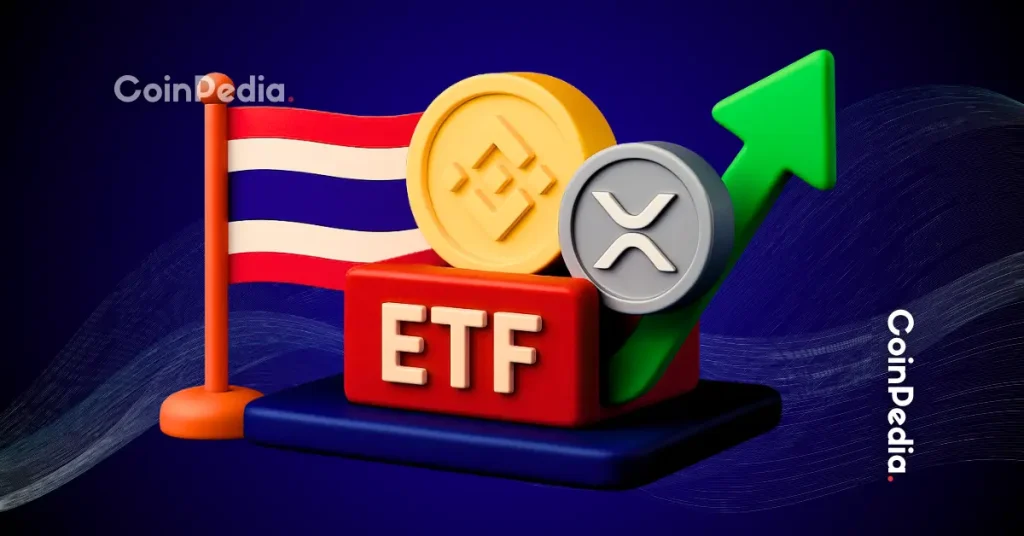 Thailand Approves Bitcoin for Derivatives Market, Crypto ETF...
 Coinbase CEO Brian Armstrong Sells $550M in Shares as COIN S...