Summary Visa is expanding USDC settlement to U.S. banks via Solana, accelerating behind-the-scenes transaction finality and deepening its partnership with Circle. The SEC’s latest roundtable signals a constructive shift in U.S. policy on crypto privacy, with regulators proactively engaging on how to balance blockchain’s public transparency with meaningful financial privacy. Tether is exploring tokenized shares as it seeks a $20 billion raise at a $500 billion valuation, while concerns persist over stablecoin issuers’ profitability amid falling interest rates and Circle’s weak post-IPO performance. Visa Expands USDC Settlement to U.S. Banks on Solana Visa ( V ) is extending its stablecoin settlement programs, enabling U.S. banks and fintechs to settle their Visa obligations in Circle’s USDC ( USDC-USD ), beginning with support on the Solana ( SOL-USD ) blockchain. Cross River Bank and Lead Bank are the first participants, with a broader rollout expected through 2026. The initiative aims to give issuers and acquirers faster, seven-day-a-week settlement and more predictable liquidity, particularly around weekends and holidays. This rollout is not a consumer-facing feature. Cardholders will continue to spend in dollars, and merchants will still receive dollars. The improvement happens between financial institutions and Visa, where obligations are settled. The expansion also deepens Visa’s collaboration with Circle: the payments network will support the upcoming Arc blockchain and operate a validator once the chain launches. Key Take In the traditional card network, settlement between issuers, acquirers, and Visa typically occurs on fixed banking schedules, often taking 1–2 days (longer over weekends and holidays). Funds move through legacy banking rails such as ACH or wire transfers, which are not designed for real-time, 24/7 liquidity. With this new feature, Visa’s partner banks settle behind the scenes using USDC to speed up and modernize liquidity flows. In our recent analysis article, we believe USDC will capture a significant share of regulated stablecoin growth, benefiting from the clearer regulatory environment following the GENIUS Act. While there are new competitors from major fintech and financial institutions, these entrants cannot compete with the established network effects of USDC. We also highlight Arc could play a role for Circle similar to what Base has become for Coinbase ( COIN ). Base has quickly grown into a leading Ethereum Layer 2 and is now contributing a meaningful share of Coinbase’s broader revenue mix. If Arc gains traction, it could evolve into a significant Layer 1 network that captures a portion of the value currently flowing to blockchains like Ethereum ( ETH-USD ) and Solana through USDC-related activity. SEC Leaders Highlight the Importance of Privacy Tools in Crypto At the SEC’s Roundtable on Financial Surveillance and Privacy in Washington held this week, SEC Chair Paul Atkins and Commissioner Hester Peirce discussed the growing tension between blockchain transparency and individual financial privacy. Public blockchains offer unprecedented visibility to transaction history, far exceeding the traditional financial systems where all transactions are stored privately by different institutions. This level of transparency, when paired with advanced on-chain analytics, could turn crypto into the most powerful financial surveillance architecture ever invented. Atkins argued that regulatory approaches, such as treating every wallet as a broker or requiring exhaustive transaction reporting, could create a “financial panopticon,” undermining both market functioning and civil liberties. He highlighted the need for privacy-preserving tools that allow compliance without exposing users’ entire financial histories. Key Take Unlike the conventional perception that cryptocurrencies like Bitcoin ( BTC-USD ) and Ethereum are anonymous, they are actually not. Transactions on Bitcoin and Ethereum are recorded on public ledgers and are visible to all. Skilled analysts can often uncover the real identities behind wallet addresses by tracing the transaction history to the original on-ramp step in centralized exchanges, thus linking to a KYCed user in centralized exchanges. Transacting in BTC or ETH essentially has less financial privacy than just using cash, as their entire transaction history can be traced and analyzed. Privacy coins and protocols exist in a tense regulatory environment. On one hand, they fulfill a legitimate demand for financial privacy and security; on the other, regulators worry that anonymity features can facilitate money laundering, terrorism financing, and other illicit activities. This concern has led to increased scrutiny and crackdowns on privacy-focused crypto projects in recent years. Some privacy-focused projects offer an optional privacy model that allows users who need transparency or auditability to use transparent addresses, while others can choose fully private transactions. This approach may offer a middle ground that preserves privacy in crypto while balancing regulatory requirements. Tether Explores Tokenizing its Shares Tether ( USDT-USD ) is reported to be exploring whether to issue tokenized versions of its shares while it seeks to raise about $20 billion at a valuation near $500 billion. This figure would put the company alongside some of the most highly valued private firms, including OpenAI ( OPENAI ) and SpaceX ( SPACE ). People familiar with the matter say Tether’s leadership is reviewing options such as tokenized equity and buybacks to give shareholders a structured way to access liquidity. The discussions follow an attempt by one shareholder to sell at least $1 billion worth of equity at a significantly lower $280 billion valuation, a move that management feared could complicate the company’s valuation. Tether has not indicated any interest in pursuing a public listing. Circle remains the only major stablecoin issuer that is now trading publicly, and its market value, at about $20 billion, sits far below the valuation Tether is aiming for. Key Take Stablecoin is clearly the most promising sector in the crypto market with product–market fit and a clear revenue model. However, this sector does not provide much opportunity for retail investors to participate, except through Circle stock. While many large institutions are launching their own stablecoins, such as PayPal’s PYUSD-USD , these stablecoin segments are too small compared to these companies’ existing businesses and do not provide meaningful exposure for investors who want exposure to stablecoin development. Despite Circle being the only stablecoin stock, it has not shown good performance since its IPO in June. Its price has fallen back to around $80 after an initial surge to over $250 right after the IPO. This is despite USDC experiencing continued supply growth and overall expansion of the stablecoin market during this period. Investors are concerned that the interest rate cutting cycle could weigh on the profitability of stablecoin issuers, as almost all income for stablecoin issuers comes from interest earned on reserve assets, which are primarily short-term U.S. Treasuries. Weekly Market Chart: The Prediction Market Race Beyond the noise of incentives-driven volume farming, the real contest in prediction markets is increasingly shaping up as Kalshi ( KALSHI ) versus Polymarket ( POLYMARKET ). Recent Dune data shows Kalshi pulling slightly ahead in open interest ($320 million versus Polymarket’s $310 million) while steadily closing the gap in daily trading activity and user engagement. Both platforms are moving toward a similar endgame: broader regulatory clarity and mainstream distribution, paired with a commitment to preserving deep crypto-native liquidity. Polymarket’s agreement with Intercontinental Exchange, potentially involving up to $2 billion in investment and institutional distribution of its event-driven data, marks a clear bid for traditional finance alignment and legitimacy. Kalshi is taking a different approach. Rather than bringing crypto to the regulated world, it is bringing regulated event contracts onto crypto rails. The platform has begun tokenizing its markets on Solana as SPL tokens, opening the door to continuous on-chain trading and full DeFi composability, from lending and borrowing to collateralizing positions. Source: BloFin Research Dune Dashboard Disclaimer: The information provided herein does not constitute investment advice, financial advice, trading advice, or any other sort of advice, and should not be treated as such. All content set out below is for informational purposes only. Original Post

 US SEC and CFTC Sign MoU to Coordinate Crypto Regulation and...
 Kraken Announces Pi Network Listing Ahead of Pi Day PI Price...
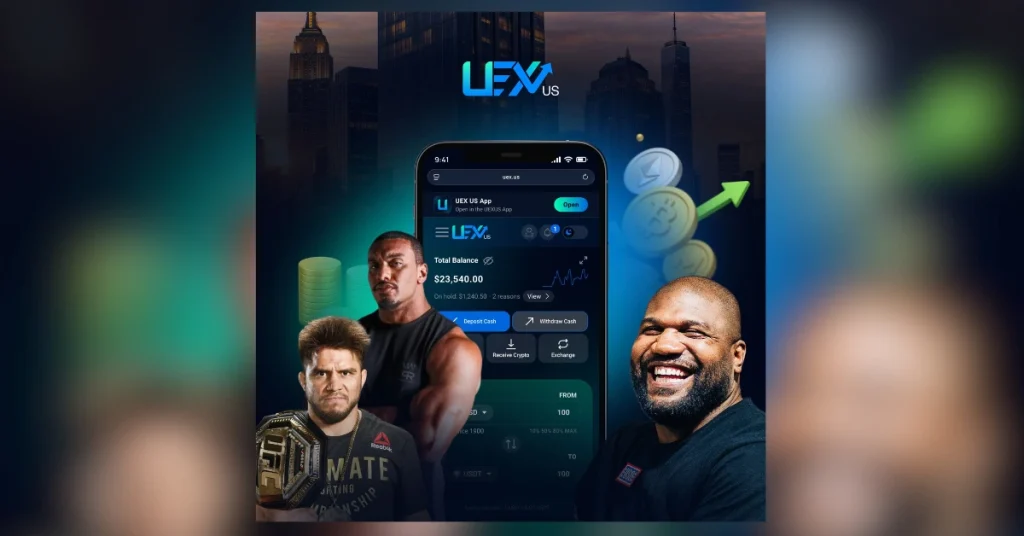 UEX US Expands Its Ecosystem: A Platform Where Digital Asset...
 XRP Price Prediction: Can Bulls Push XRP Above $2 After This...
 ETH News: Why Institutions Keep Choosing Ethereum Over Other...
 Trump-Linked WLFI Launches World Swap Forex Platform
 Thailand Approves Bitcoin for Derivatives Market, Crypto ETF...
 Coinbase CEO Brian Armstrong Sells $550M in Shares as COIN S...